The Project
APHIA is a research-based initiative that explores how workplaces can become more inclusive for people with different working and communication styles, including neurodiversity and autism. The project focuses on understanding how everyday organisational practices—particularly in recruitment, collaboration, communication, and performance evaluation—shape the experiences of neurodiverse individuals in employment.
Rather than approaching neurodiversity as an individual challenge, APHIA adopts a system-focused and bottom-up perspective. The project examines how organisational structures, implicit norms, and workplace expectations influence collaboration and inclusion, especially within fast-paced sectors such as ICT. By doing so, APHIA aims to shift the focus from individual adaptation to organisational learning and change.
The research phase combines primary and secondary methods. Desk research and the review of existing good practices at national and European levels are complemented by ethnographic fieldwork, including in-depth interviews and group discussions with HR professionals, managers, employees, and individuals with autism. This approach allows the project to capture multiple perspectives and to understand how inclusion is experienced, negotiated, and practiced in real workplace contexts.
A key principle of APHIA is the active involvement of people with lived experience. Individuals with autism are engaged not only as participants but also as contributors to the knowledge production process, ensuring that insights are grounded in real experiences rather than assumptions. This reflects the project’s commitment to ethical research practices and the principle of “nothing about us, without us.”
The findings of the research directly inform the development of targeted training and learning activities for HR professionals and managers, particularly in the ICT sector. These activities focus on inclusive hiring practices, effective collaboration across different working and communication styles, and organisational strategies that support long-term inclusion and retention. Through this research-to-training approach, APHIA aims to contribute to more equitable, inclusive, and sustainable workplaces across Europe.
Research
The Research Work Package focuses on gaining an in-depth understanding of how everyday workplace practices shape collaboration with people who have different working and communication styles, including neurodiversity and autism. Rather than examining individual differences in isolation, this work package looks at how organisational routines, expectations, and decision-making processes are experienced across roles within the same workplace.
The research is based on qualitative and participatory methods, including in-depth interviews and focus group discussions with HR professionals, managers, employees, and individuals with autism. By engaging participants from different roles within the same organisational contexts, the research captures how workplace practices are understood, applied, and negotiated in daily work life.
A central aim of this work package is to identify recurring approaches and assumptions embedded in workplace systems—such as recruitment processes, communication norms, task allocation, and performance evaluation—that shape how collaboration functions in practice. These patterns are often taken for granted by those working within the system, yet they can create friction or exclusion for people whose working and communication styles differ from the norm.
By focusing on lived experiences and role-specific perspectives, the Research Work Package generates grounded insights into how inclusion is produced—or limited—through everyday organisational practices. The findings provide a structured understanding of where change is possible and meaningful, forming the evidence base for the project’s subsequent training and capacity-building activities.
Training
The Training Work Package builds directly on the findings of the Research Work Package and translates research insights into practical learning activities. Its purpose is not to deliver general awareness-raising, but to address concrete workplace patterns identified through research and support more inclusive ways of working in everyday organisational contexts.
The training activities are designed primarily for HR professionals and managers, with a particular focus on the ICT sector. They focus on working and communication practices, decision-making processes, and organisational norms that influence collaboration with people who have different working and communication styles, including neurodiversity and autism.
Rather than prescribing one-size-fits-all solutions, the training engages participants in reflecting on how existing workplace systems operate and how small but targeted changes can improve collaboration, inclusion, and retention. The content is grounded in real workplace experiences and examples identified during the research phase, ensuring relevance and practical applicability.
A distinctive element of this work package is the involvement of people with lived experience, who contribute as co-trainers or contributors to the learning process. This approach supports mutual learning and reinforces the project’s commitment to participatory adult education.
Through this research-informed approach, the Training Work Package aims to strengthen organisational capacity, support sustainable change, and enable workplaces to move from intention to practice in creating more inclusive working environments.
Community
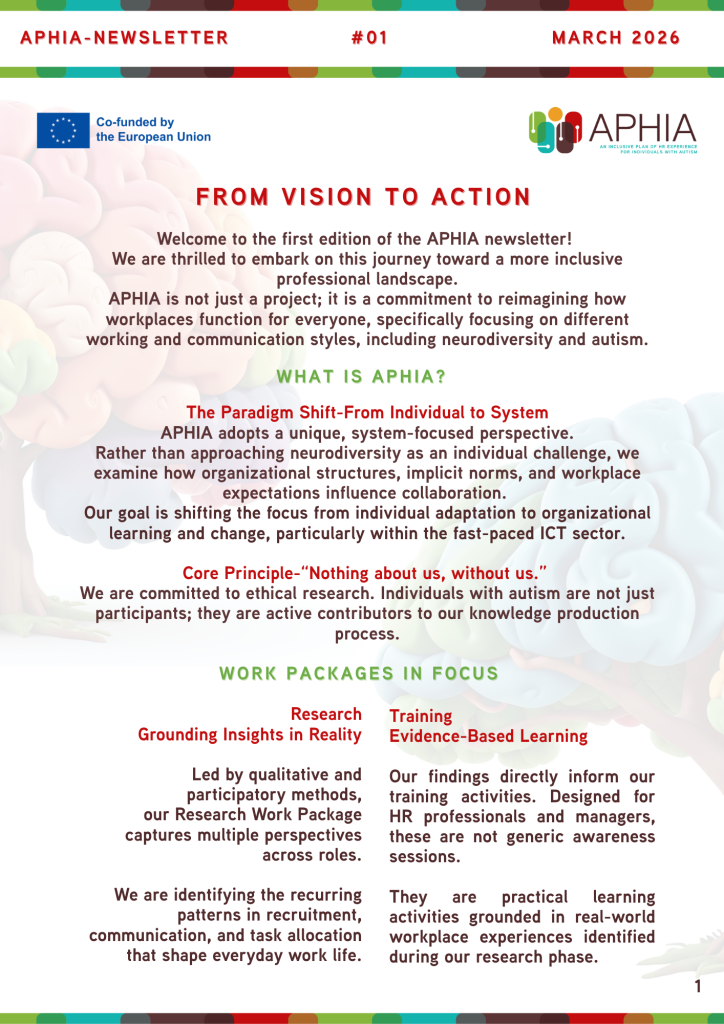
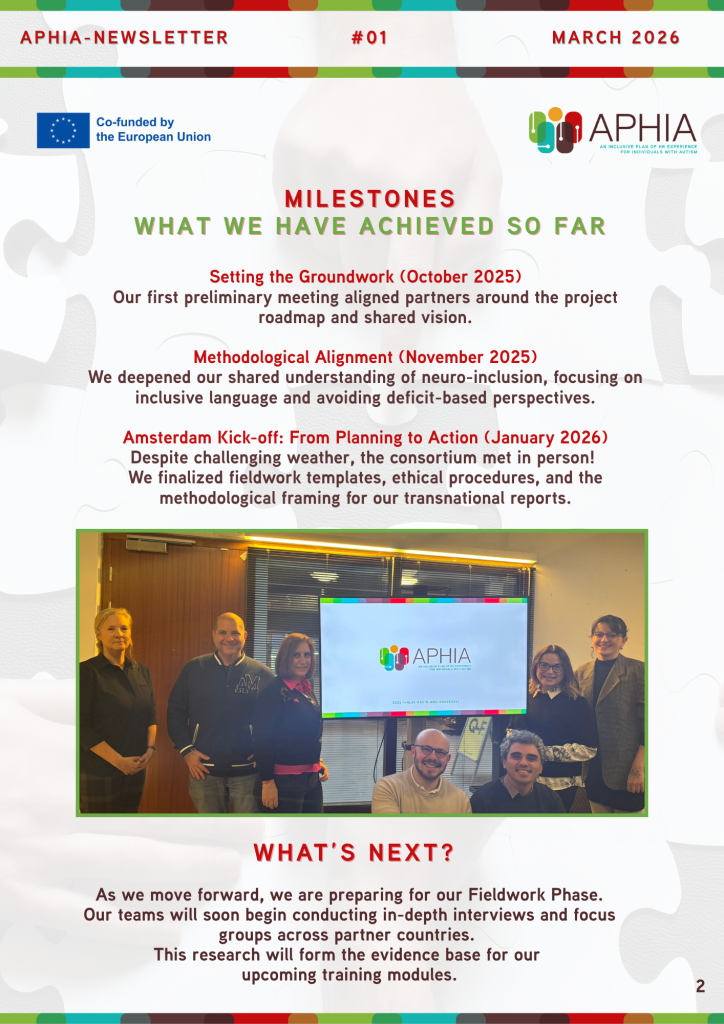
APHIA’s First Newsletter is published.
06 March 2026 | Online
We are pleased to release the first edition of the APHIA newsletter, marking our transition from strategic setup to active implementation across Europe.
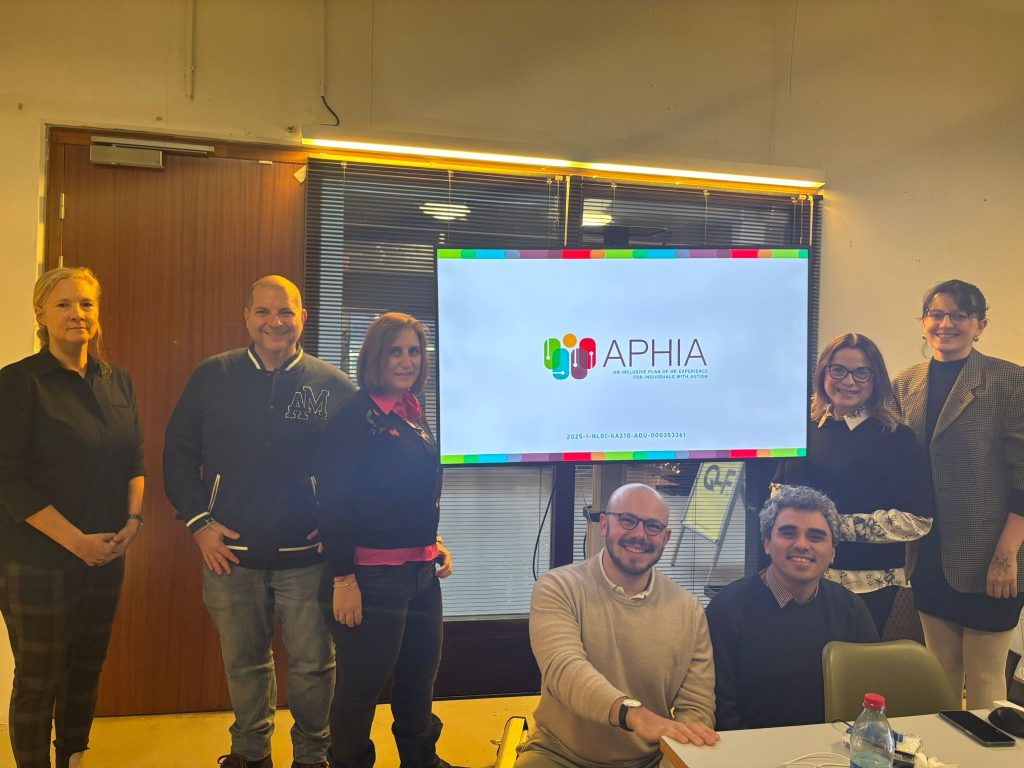
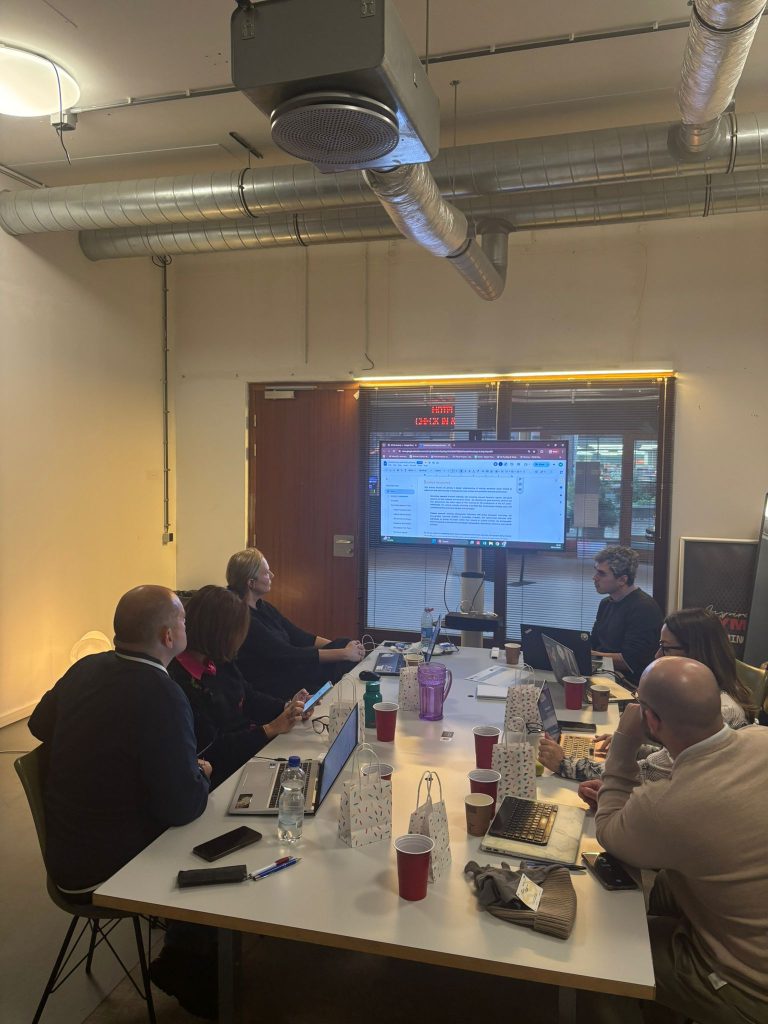
Kick-off Meeting in Amsterdam: From Planning to Action
9 January 2026 | Amsterdam
On 9 January 2026, the APHIA consortium gathered in Amsterdam for the project’s in-person kick-off meeting. Despite challenging weather conditions and several cancelled flights, the consortium successfully came together, demonstrating strong commitment and shared ownership of the project.
The meeting marked a transition from planning to implementation. Partners reviewed project management procedures, including administrative requirements, documentation processes, and communication routines. It was agreed that regular monthly online meetings will support coordination, with key milestones already scheduled for the coming years.
A significant part of the meeting focused on Activity 1 (Research). Partners aligned on the use of inclusive language across all project outputs, reviewed the fieldwork templates and guiding questions, and agreed on a common methodological framing for national and transnational reports. Ethical procedures, including informed consent and confidentiality, were confirmed as integral to the research process.
The consortium also finalised arrangements for upcoming activities, including interviewer training, interviews and focus groups, training phases, supervision, and dissemination. Clear internal deadlines were agreed to ensure smooth implementation and timely delivery of outputs.
Beyond the technical discussions, the kick-off meeting strengthened collaboration and trust among partners. Meeting in person allowed for richer exchange, reflection, and alignment—reinforcing the collective commitment to building an inclusive, research-driven project.
Second Online Meeting: Aligning on Research and Methodology
24 November 2025 | Online
The second online meeting of the APHIA consortium took place on 24 November 2025 and focused on deepening the shared understanding of the project’s research approach and methodological framework.
During this meeting, Logik Evolution presented key conceptual and methodological inputs, expanding on how autism and neurodiversity are understood within the project. The presentation prompted valuable discussion among partners, particularly around inclusive language, ethical considerations, and the importance of avoiding deficit-based or stigmatising perspectives.
Partners also discussed the structure of the upcoming fieldwork activities, including interviews and focus group discussions, and the need for consistency across countries. Emphasis was placed on ensuring that all research tools and processes reflect the project’s values and methodological commitments.
This meeting played a critical role in aligning partners before the start of fieldwork and reinforced the collaborative nature of APHIA’s research design.
Preliminary Online Meeting: Setting the Groundwork for APHIA
31 October 2025 | Online
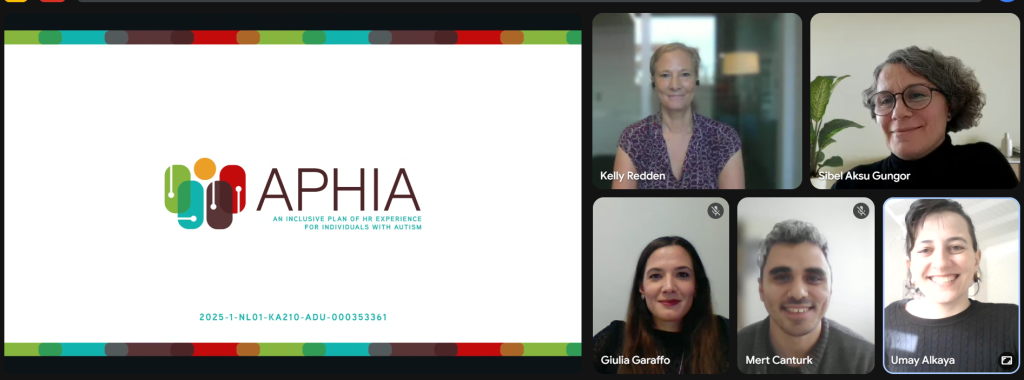
The APHIA consortium came together for the first time on 31 October 2025 in an online preliminary meeting. This introductory session marked the official start of the collaboration and focused on aligning partners around the project’s overall vision, structure, and timeline.
During the meeting, PUHU shared the project roadmap, outlining the work packages, key milestones, and coordination principles that will guide APHIA over the coming years. The session created a shared understanding of how research, training, and dissemination activities will be interconnected, and how partners will collaborate across countries and roles.
This meeting also served as a space to clarify expectations, roles, and communication channels, ensuring that all partners started from the same reference point. By the end of the session, the consortium agreed on the importance of a participatory, research-led approach and the need for close coordination throughout the project lifecycle.
The preliminary meeting laid a solid foundation for the next stages of APHIA, setting the tone for collaborative decision-making and transparent project management.
Partners